
The primary formative rituals of the Christian church are baptism and eucharist, or communion. Both have undergone elaborate development in the course of church history, often in ways that markedly depart from their original meanings. Much of Christian history revolves around efforts to return to the original meaning as found in the New Testament and early church practice. In my own efforts to reclaim the core meaning of these sacred actions I have been newly impressed by the way the Eucharist emerged out of the simple meal practice of Jesus and his disciples, as we find it in the Gospels. In the miraculous feeding of the five thousand and the post-resurrection meals in Jerusalem and by the sea of Galilee it is a simple meal of bread and fish, without any mention of the wine. For me, this bread and fish meal has become a sign of the core presence of Jesus as prophetic teacher, healer, friend, and everlasting divine presence.
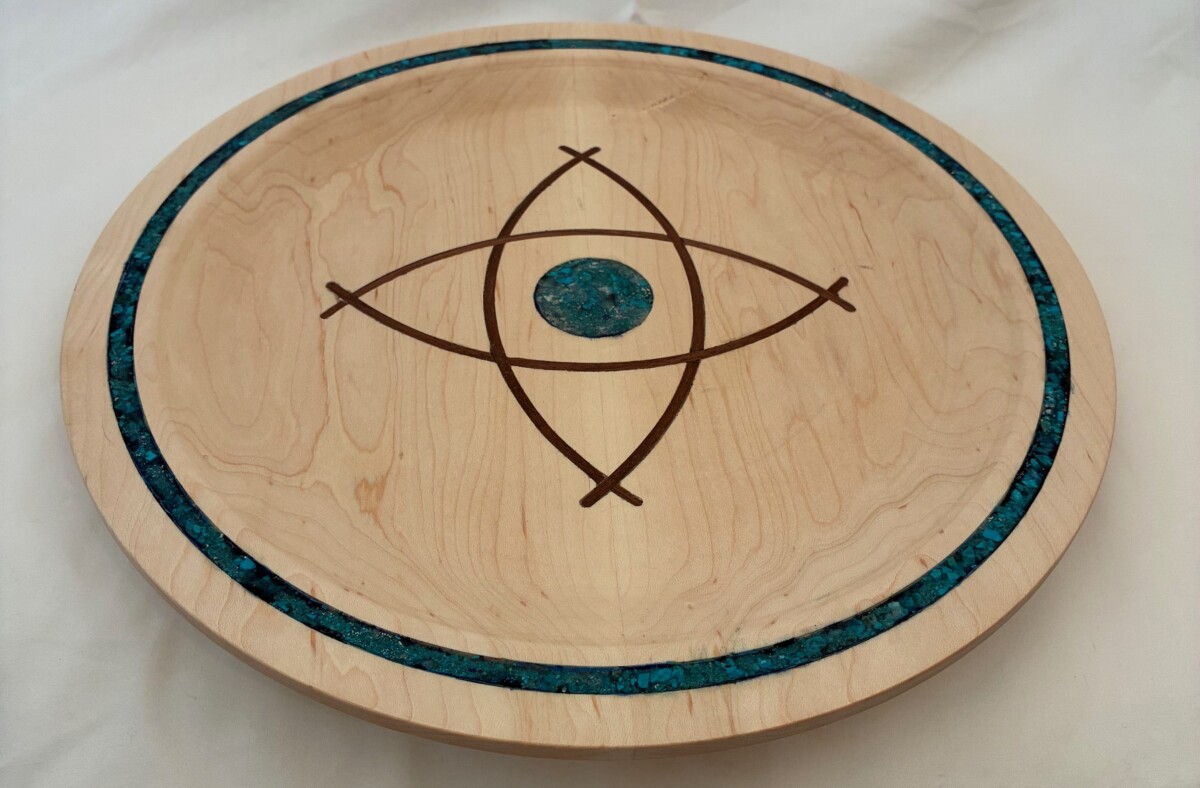
So, to celebrate the ordination of our friend Scott Taylor I turned this plate to hold the bread symbolizing Christ’s resurrection presence in our midst. At its center are two crossed mandorlas, ancient symbols of the womb of life, in which Mary and Jesus are often framed. The mandorla was originally called the vesica pisces, “the vessel (or womb) of the fish.” Thus it also represents the fish, which, with the bread, formed the heart of the meals of Jesus’s ministry. The mandorla also symbolizes the intersection of heaven and earth, becoming a template for the arches of medieval cathedrals.
On the rim is an inlay of crushed turquoise, reminding us of the baptismal waters that bring us to new life in the community gathered at table. The waters also appear as a well at the center of the plate, from which we continually draw the water of ongoing life. The plate was turned from maple that grew in the nearby mountains here in western North Carolina. The wood inlay is black walnut. It is 12.5 inches in diameter.
We no longer have fish at our communion meals in the churches, but maybe Scott, an avid fisherman, might just do something about that!
Thank you Bill for the amazing gift! The administration of the sacraments and interpreting their meaning in community life is a high calling. I am totally on board with bringing fish back to the table! The plate currently adorns my bookshelf, but will soon make its way to its intended destination in worship.
Yours,
Scott